FROM THE BOOKSHELF / A PAGE TO KEEP
The Understanding Machine: When AI Stops Drawing and Starts Thinking
Published on 2026-05-09
The Understanding Machine: When AI Stops Drawing and Starts Thinking Here's a test. Open any mainstream AI image generator and type: "a robot trying to paint, but its arm is made of the same paint it'...
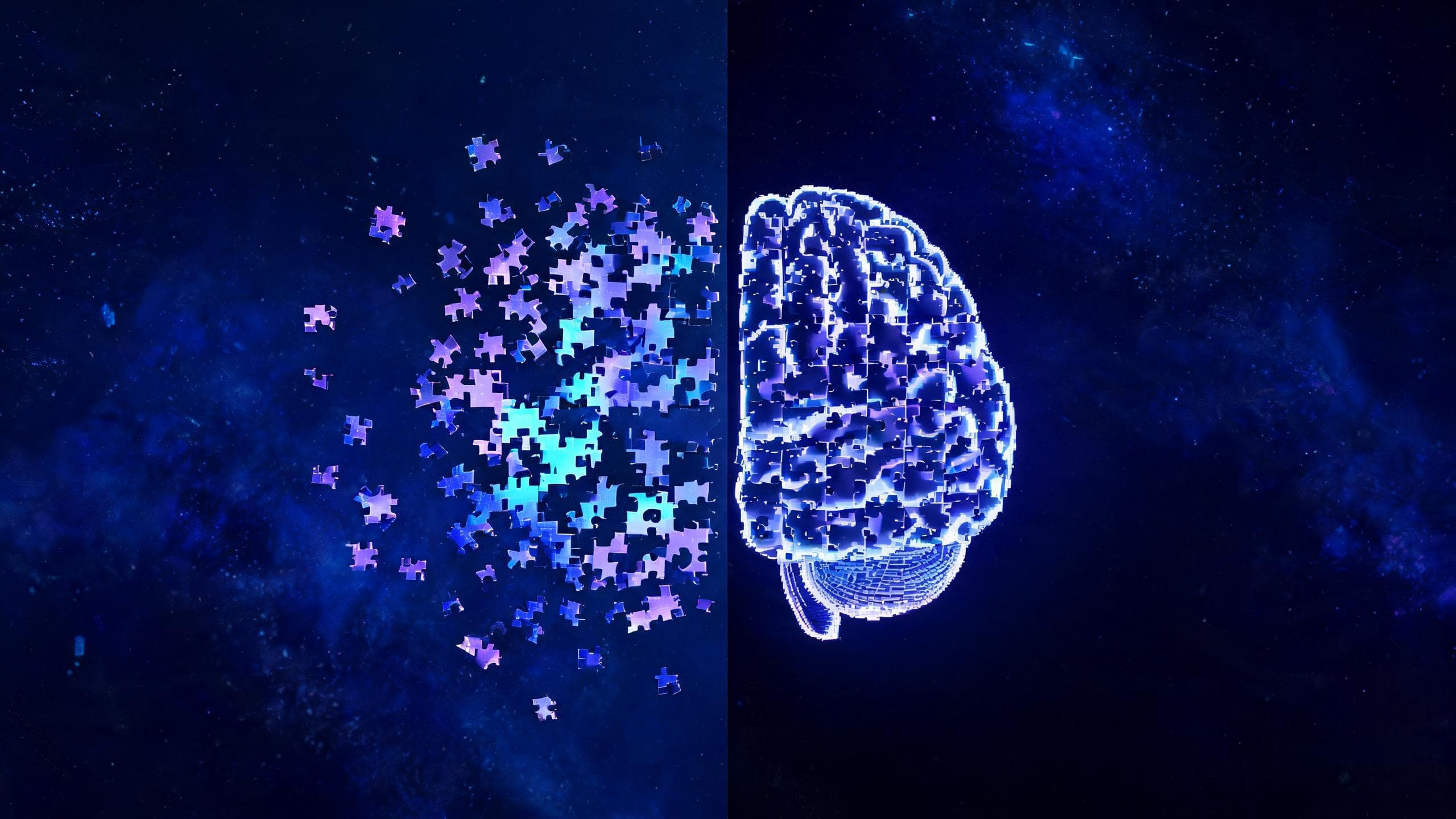
Here's a test. Open any mainstream AI image generator and type: "a robot trying to paint, but its arm is made of the same paint it's spreading on the canvas."
The results will be beautiful. They will also be wrong — the robot arm is a brush, or a spray, or some vaguely artistic appendage. The causal loop in your prompt — arm made of paint, painting with that same paint — is lost. The model doesn't understand your sentence. It statistically resembles it.
We've spent three years obsessing over image quality. Resolution. Prompt adherence. How many fingers. The real revolution is quieter, and it's not about pixels at all.
The Generation Trap
The AI image boom followed a predictable arc: someone builds a model, it makes pretty pictures, everyone loses their minds, the next model makes prettier pictures, everyone loses their minds again. DALL-E to Midjourney to Stable Diffusion to Flux to whatever's next.
Underneath all of it, the core paradigm stayed the same: you describe, it generates. The model is a very sophisticated autocomplete. It learned what pixels tend to follow other pixels, in certain styles, given certain text conditions. It's a prediction engine wearing an artist's coat.
This is genuinely impressive. But it's also fundamentally limited in a way that's only now becoming visible.
Because the moment you ask an image model to do something that requires reasoning — not just pattern matching — it breaks down in predictable ways.
Seedream 5.0 Lite ran an experiment that should make every AI company uncomfortable. They gave it a pile of scattered Lego pieces and asked it to show them assembled. Not assembled randomly — into a specific vehicle. The model had to first identify the parts, then infer the intended structure, then generate the correct result.
A standard diffusion model would either hallucinate a plausible-looking assembly or refuse gracefully. Seedream 5.0 Lite, allegedly, got it right. Not because it learned more pixel patterns. Because it learned something closer to logic.
Why "Like" and "Right" Are Different
Here's the distinction that matters.
"Like" — the current paradigm. The model has seen millions of images of assembled Lego sets. When you ask for a Lego motorcycle, it generates something that looks like the motorcycles it was trained on. The pixels are correct. The result is satisfying, until you look closely.
"Right" — the emerging paradigm. The model understands that Lego pieces have connection rules. It knows a 2x4 brick can connect to another 2x4 brick but not to a round peg without an adapter. It understands structural integrity — you can't build a cantilevered roof out of standard pieces without support. When it generates your motorcycle, it's not guessing what a motorcycle looks like. It's constructing one.
The difference sounds academic until you need the model to do something novel. Show a diffusion model a new object it's never seen — say, a bioengineered organism with an unfamiliar structural logic — and it will generate something that looks right but violates the rules that make it actually work. Show an understanding-based model the same object, and it will infer the rules and generate something that's structurally correct, even if it looks unfamiliar.
This is the gap between mimicry and comprehension. We've been measuring the wrong thing.
Prompt Engineering Is a Bug, Not a Feature
The entire discipline of prompt engineering is an admission of failure.
Think about what it means: you have to learn a special language to communicate your intent to a machine that claims to understand natural language. "Masterpiece, detailed, 8k, cinematic lighting, trending on ArtStation" — these aren't instructions. They're ritual phrases that trigger the right statistical associations.
A system that truly understands would need none of this. You'd say "make the background feel lonely" and it would understand that loneliness is a spatial concept — empty space, muted colors, small subject, off-center composition — and generate accordingly. Not because it memorized "lonely background" prompts. Because it understands the semantics.
Seedream's direction — natural language instructions like "replace the background with a starry sky" being understood without elaborate prompting — isn't a product feature. It's evidence that the underlying model architecture is shifting from generation toward something closer to reasoning.
The people who will be caught off guard are the prompt engineers. The people who will thrive are everyone else.
The Web Search Moment
There was a time when knowing how to use search operators — site:, intitle:, -filetype: — was a genuine professional advantage. Today, anyone who doesn't know advanced search syntax is fine, because search got smarter. The skill became invisible.
Prompt engineering is following the same path. It will become plumbing.
But there's a more interesting analogy. Remember when search engines were just keyword matching? You typed words, you got pages that contained those words. Then Google built a semantic layer underneath — it started understanding what you meant, not just what you typed. The results got dramatically better, and nobody talks about search operators anymore.
AI image generation is in its keyword-matching phase. The models that will win the next round are the ones that build the semantic layer underneath — the ones that understand the difference between "a man running" and "a man who doesn't know he's being watched running" not because they memorized both phrases, but because they understand attention, threat detection, and visual narrative.
The generation wars have been about hardware. The next war is about depth of understanding.
The Bigger Picture
This shift isn't happening in isolation. The same tension exists in text models — GPT-4o's vision capabilities, Gemini's multimodal reasoning, the quiet death of pure language models. The field is converging on a single hypothesis: the models that win won't be the ones that generate the most fluid output. They'll be the ones that understand the input most deeply before producing anything.
Image generation is just where it's easiest to see. A diffusion model that can look at a pile of parts and reason about assembly has demonstrated something that transcends image generation: it's demonstrating comprehension of physical causality. That's a building block for something much larger than better pictures.
The best metaphor I've found: most current AI image models are like a painter who has memorized every brushstroke in art history but never learned to see. They can reproduce. They cannot interpret.
The models being built now are the ones learning to see first.
And that's a much bigger deal than another fidelity upgrade.
Cover image generated with Seedream 5.0 via Doubao.