Loading...
Loading...
胡新宇
Published on 2026-05-26
Every engineering team has code nobody touches. AI code review tools are now reading those files and seeing something humans have learned to ignore: the physical trace of decisions that calcified into architecture. This is what AI-first review workflows are revealing about the codebases we inherited.
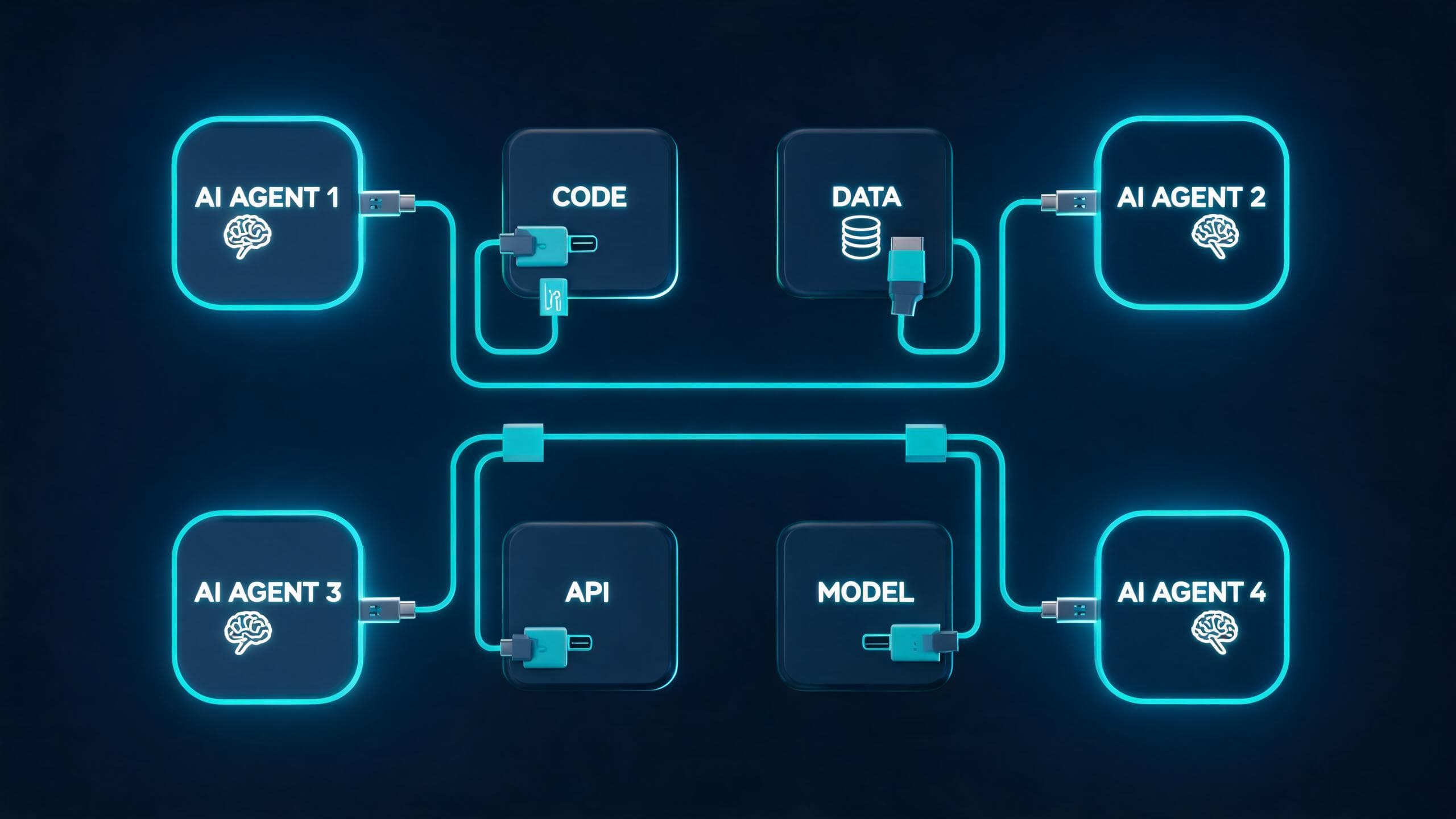
Every engineering team has them: files that nobody owns, modules that everybody avoids, and functions whose original authors left years ago. Walk into any mature codebase and ask engineers which areas they'd never touch voluntarily. The answers are immediate and visceral. "That payment module? Touch it and the tests explode." "The config system? It works, kind of, nobody knows exactly why."
Here's what's interesting: AI code review tools are now reading those same files — and they're seeing something completely different.
Human code review, at its best, is a social contract. Senior engineers scan for patterns they've seen fail before. Juniors flag things they don't understand. But nobody questions the architecture that everyone assumes is correct, because questioning it would mean reopening decisions made years ago by people who left before anyone joining today was hired.
The result is a systematic blind spot. We review the code in front of us. We don't review the decisions baked into the structure.
When AI tools started reviewing pull requests at scale — not as a rubber stamp, but as a first-pass scanner that every engineer sees — something unexpected happened. The models flagged architectural problems that nobody had noticed. Not bugs. Not security issues. Structural violations that were hiding in plain sight because the entire team had learned to look past them.
The pattern recognition is uncanny. AI models trained on millions of codebases have internalized something human reviewers rarely express: code is a physical artifact of decisions. A function that takes seven arguments was written by someone who hadn't yet learned to pass a context object. A class with seventeen methods is the fossil of a team that hadn't discovered composition. A module that depends on four other modules in a circular graph is the residue of a sprint where nobody had time to refactor.
When an AI flags a "function is too long" or "class does too many things," that's not just style preference. That's the model identifying the physical trace of a decision that was never revisited.
The more interesting flags aren't about individual functions. They're about the shape of the system.
AI code review tools are increasingly surfacing what we might call "architectural debt" — the accumulated weight of decisions that made sense at the time but have since become load-bearing assumptions nobody can change without breaking things nobody understands.
A mid-size fintech company ran an experiment. They fed six months of pull requests through an AI review tool and compared what the AI flagged against what human reviewers had actually commented on. The overlap was about 40%. Not surprising — human reviewers catch different things than AI does.
What was surprising: of the issues the AI flagged that humans had missed, 70% fell into a single category. Not style. Not performance. Structural coupling. The AI kept noting that Module A and Module B were tightly entangled in ways that created invisible fragility — changes to one would unpredictably break the other.
The human reviewers had never flagged these because the entanglement was so familiar that nobody saw it anymore. It was the water fish swim in.
The AI's external perspective — unburdened by the institutional memory of "why it was built that way" — saw the graph of dependencies and flagged the nodes that violated every rule of modular design. The humans saw the code. The AI saw the architecture.
There's a difference between code quality and architectural health, and the AI tools are getting good at distinguishing them.
Code quality: "This function is 200 lines and hard to test." Fixable. Refactor it.
Architectural health: "This module is a single point of failure that every other component depends on, but it hasn't been touched in three years because nobody knows what it does." This requires a conversation about risk, about the organization's relationship with its own codebase, about whether the team has the context to safely modify something that touches everything.
AI is starting to surface these questions in the review comments — not as technical observations but as organizational warnings.
Here's the strange thing: the files that AI reviews flag most frequently are almost never the newest code. They're the oldest. The code from 2018, from 2015, from the founding engineering team that wrote the first version of the system before anyone else joined.
This creates a paradox. Those files are often the most stable — they're the ones that work, that have been battle-tested, that everyone is afraid to touch precisely because touching them is dangerous. And now AI is saying: these are exactly the files with the most architectural problems.
The resolution: legacy code isn't healthy because it's stable. It's stable because it's load-bearing and nobody knows how to change it without breaking things. The stability is real. The architectural health is not.
The AI code review wave isn't primarily about catching bugs faster. It's about making visible the structural decisions that human review has systematically avoided questioning.
Teams that have adopted AI-first review workflows report a consistent experience: the AI starts flagging the same class of problem repeatedly, in different files. Patterns that nobody noticed because they were everywhere. Violations of modularity that were so normalized that they stopped registering as violations.
The AI doesn't have the social context that makes these problems invisible. It sees the dependency graph. It measures coupling. It counts the blast radius of proposed changes. And it reports, with unsettling regularity, that the most dangerous code in the repository is code nobody is allowed to touch.
That's not an AI problem. That's an organizational problem that the AI finally made visible.
The ghost in the machine is the architect who left in 2019. She's still writing code — in every file you're afraid to change.