Why MCP Is the USB-C Moment AI Has Been Waiting For
Published on 2026-04-28
MCP, the Model Context Protocol, is solving AI's integration hell problem. Learn why this open standard from Anthropic could become the USB-C moment for AI tooling.
Why MCP Is the USB-C Moment AI Has Been Waiting For
Every new technology starts with a fragmentation crisis. The early days of USB were a nightmare of proprietary connectors and incompatible cables. WiFi had a dozen competing standards before 802.11 eventually won. The early PC era gave you DOS, Mac OS, AmigaOS, and half a dozen others that couldn't talk to each other without bridges that barely worked.
AI tooling is in that exact messy phase right now — and it just found its salvation.
The Integration Hell Problem Nobody Talks About
Ask any developer who's built a serious AI agent system what's the hardest part, and most will give you the same answer: it's not the AI model itself. It's everything around it. The integrations. The tool connections. The dozen different APIs that each behave differently, require different auth flows, and break in different ways.
You build a research agent in LangChain. It works beautifully. Then your teammate wants to use the same tools in an OpenAI Agents SDK project. You're starting from scratch. The company next door built a customer support agent in CrewAI that could genuinely use your code — but the frameworks don't interoperate, so you might as well be speaking different programming languages.
This is the problem MCP was built to solve.
What MCP Actually Is
MCP, the Model Context Protocol, started as an Anthropic open-source project in late 2024. The core idea is deceptively simple: create a standardized way for AI models to connect to external tools, data sources, and services — without every framework having to invent its own integration layer.
#AI Agent#Agent#上下文工程
Why MCP Is the USB-C Moment AI Has Been Waiting For
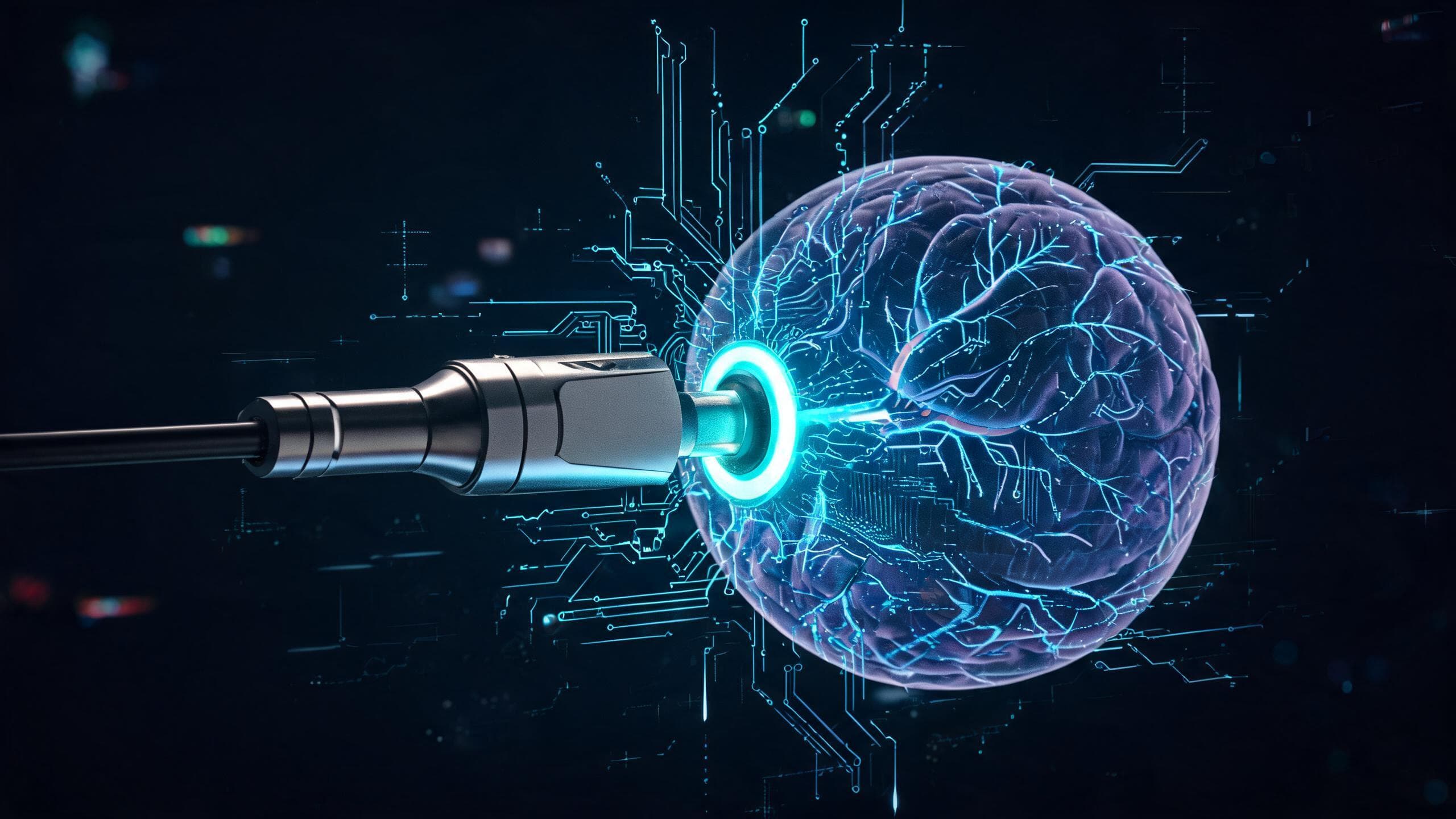
Think of it as a universal adapter. Instead of writing custom code for every tool your AI needs to call, you describe your tool once, in a manifest, and the protocol handles the rest. Your agent can talk to a filesystem, a GitHub repo, a database, a Slack channel — anything — through the same interface, regardless of which framework or model you're using underneath.
The architecture is clean. An MCP host is the AI application the user interacts with. MCP clients maintain persistent, bidirectional connections to servers. MCP servers expose resources — tools, data, capabilities — through a well-defined protocol. The client-server split means you can add new integrations without touching the core AI logic.
// A simplified MCP tool manifest{"name":"github-repos","tools":[{"name":"list_repos","description":"List repositories for a given org","inputSchema":{"type":"object","properties":{"org":{"type":"string"}}}}]}
That JSON snippet is roughly what telling an MCP server "here's what I can do" looks like. From there, any compatible MCP host can discover and use those tools without custom glue code.
Why This Time Might Actually Be Different
You could be forgiven for being skeptical. Haven't we seen "universal AI integration standards" before? There was the Agent Communication Protocol, the OpenAI Plugin standard, a dozen framework-specific solutions. Most of them died quietly or became islands with no bridges to other islands.
The difference with MCP is the adoption pattern. Anthropic open-sourced it, but crucially, they didn't try to own it. The protocol is vendor-neutral. Microsoft has signaled interest. The open-source community has been building servers for popular tools at a clip. More importantly, the major framework players have started building MCP compatibility into their stacks — which is how a standard actually becomes a standard, not through grand announcements but through quiet, inevitable adoption.
The other reason this feels different: AI agents are finally good enough that integration quality matters. When your AI was just answering trivia questions, sloppy API integrations were a minor annoyance. When your AI is managing your calendar, writing and deploying code, handling customer support tickets, and coordinating with other agents — the reliability and consistency of those integrations becomes mission-critical. Fragmentation stops being an academic problem and starts being the thing that makes your agent system fall over in production.
The Ecosystem Starting to Form
What does MCP look like in practice? The ecosystem is still young, but the shape of it is becoming visible.
A growing collection of MCP servers already exists for common enterprise tools: GitHub, Slack, Notion, PostgreSQL databases, filesystem access. These aren't officially supported by the tool vendors in most cases — the community is building them because the protocol makes it straightforward. The result is that plugging your AI into your company's data sources is now measured in hours, not weeks.
In development workflows, MCP is starting to feel like a genuine force multiplier. One of the killer use cases emerging is multi-agent coordination: multiple AI agents, potentially running different models or built on different frameworks, needing to communicate and share context. Without a standard protocol, you'd need custom bridging code for every pair of systems. With MCP, the agents just speak the same language. The coordination logic becomes reusable infrastructure rather than bespoke engineering for each project.
There's also a compelling case for enterprise data integration that goes beyond what traditional RAG approaches offer. Rather than retrieving documents and stuffing them into context windows, MCP lets agents actually interact with live data sources — querying a CRM, pulling metrics from an analytics dashboard, checking project management boards. The agent isn't just retrieving information; it's operating in your data environment with full awareness of what's there and how it's structured.
The Road Ahead: Choke Points and Open Questions
MCP isn't without its challenges. The protocol is still evolving, and some of the tooling around it feels immature. Security is the big one — when an AI agent can, in principle, call tools that modify your data or trigger real-world actions, the permission and audit model needs to be airtight. The current spec handles this, but enterprise-grade security practices are still catching up to the protocol's capabilities.
There's also the question of whether the community can maintain momentum. Open standards are only as good as the ecosystem around them, and maintaining servers for dozens of different tools is unglamorous work. The Anthropic team has been good about stewardship, but sustainable open-source maintenance is notoriously hard to institutionalize.
And of course, there's competition. Google's Agent Space, Microsoft's Copilot extensions, OpenAI's agents — all of these have their own integration approaches. Whether they converge on MCP, adopt it as a layer, or continue their own proprietary paths is still being decided.
None of this is settled. But the direction of travel is clear, and for the first time in the AI tooling space, it feels like the industry is moving toward a shared vocabulary rather than away from one.
What This Means for You
If you're building with AI agents today, MCP is worth your attention — not as a finished solution, but as the direction the ecosystem is moving. Even partial adoption future-proofs your integrations. The developers who spend time understanding the protocol now will be the ones writing the tools other developers depend on tomorrow.
The USB-C moment for AI isn't a metaphor I'd use lightly. USB-C genuinely solved a real problem that affected billions of people daily. AI tool fragmentation is a less visible problem, but it's real, and it's getting more expensive as AI systems become more capable and more embedded in production workflows.
We're not at the "one cable to rule them all" stage yet. But we're past the worst of the fragmentation dark age, and the path forward is becoming visible. The integration overhead that currently makes AI agent development feel like building in quicksand? That's temporary. MCP is the first serious attempt to make it someone else's problem — and so far, it looks like it might actually work.