MCP: The USB Moment for AI Is Finally Here
发布于 2026-05-07
MCP (Model Context Protocol) is the open specification that standardizes how AI models connect to external tools, data sources, and services — solving the AI integration fragmentation problem the same way USB solved the peripheral fragmentation problem in the 1990s. Anthropic shipped it, major tool vendors are building for it, and the adoption curve could be faster than any previous protocol standard.
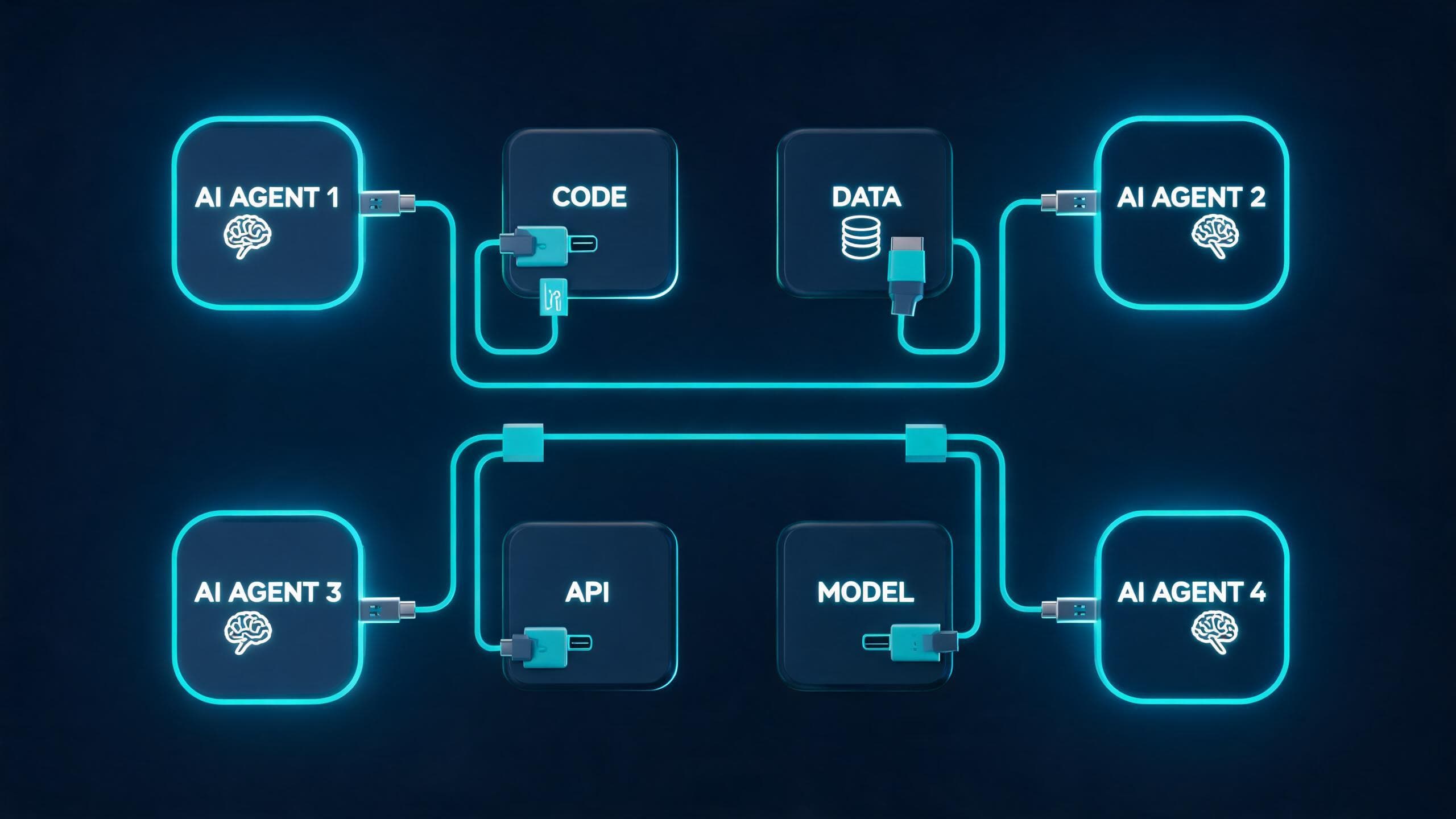
MCP: The USB Moment for AI Is Finally Here
In 1996, your printer didn't work with your camera, which didn't work with your scanner. Every peripheral had its own proprietary cable, its own driver, its own ecosystem. Then came USB — and within a decade, everything connected to everything. The protocol won not because it was the most technically elegant solution, but because it made the entire industry interoperable by default.
We are living through the exact same fragmentation right now in AI — and the solution is arriving the same way.
The Integration Hell Is Real
Every serious AI deployment today is a custom integration nightmare. The model speaks one language. The tools speak different languages. The data lives in different places. Someone has to write the glue code.
Want your AI agent to search the web, read your Slack, update your CRM, and push code to GitHub? That requires four separate integrations, four different authentication flows, and ongoing maintenance as each API evolves independently. The moment one of them changes its rate limit or authentication scheme, your agent breaks.
This isn't a toy problem. It's the central engineering challenge of every production AI system today. And the naive solution — build everything in-house, point-to-point — is a trap. It creates technical debt, vendor lock-in, and an永远 you-hire-more-engineers treadmill.
Enter MCP: One Protocol to Rule Them All
The Model Context Protocol (MCP) is an open specification that defines a standardized way for AI models to connect to external tools, data sources, and services. Think of it as the USB of AI integrations — a single interface that abstracts away the complexity underneath.
The architecture is straightforward: a client-server model where the AI host (the "client") connects to MCP servers that expose capabilities as "resources," "tools," and "prompts."
- Resources are data sources the model can read — files, database queries, API responses.
- Tools are actions the model can invoke — sending emails, creating records, executing code.
- Prompts are pre-defined interaction templates that wrap complex multi-step workflows.