Vibe Coding: The End of Programming as We Knew It
Site Owner
发布于 2026-05-13
Vibe Coding: The End of Programming as We Knew It Your next teammate doesn't need a coffee break. --- There's a new term floating around engineering teams: vibe coding. If you haven't heard it yet, y...
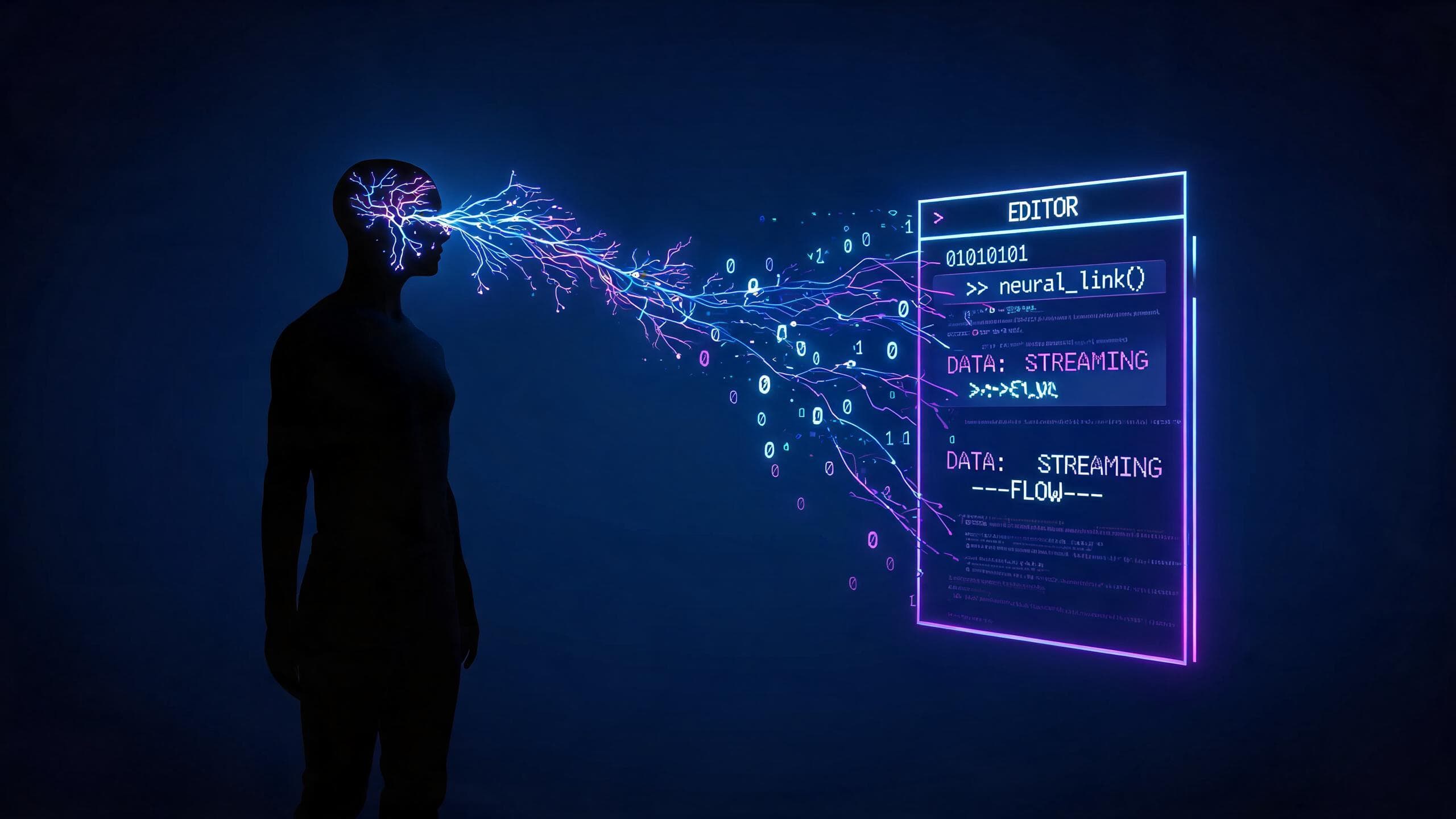
Vibe Coding: The End of Programming as We Knew It
Your next teammate doesn't need a coffee break.
There's a new term floating around engineering teams: vibe coding. If you haven't heard it yet, you will. It's the practice of building software by describing what you want to an AI — in plain English, often messily, sometimes inconsistently — and letting the model figure out the implementation.
Not pair programming. Not AI-assisted development. Just: you talk, the code appears. You review. You iterate. The machine handles the mechanics.
Engineers who do this describe a strange sensation. It's like having a junior developer who never sleeps, never gets tired, never argues about architecture, and will happily rewrite the entire backend three times if you change your mind about the approach. The tradeoff is that you stop being the person who writes code and become the person who judges it.
The interesting question isn't whether this is real. It is. The interesting question is what it means for the next decade of software engineering.
The Mechanic and the Architect
Every craftsman has a relationship with their tools that's deeper than functional. A chef doesn't just use knives — they feel the weight, the balance, the way a particular steel holds an edge. A mechanic can diagnose an engine by the sound it makes, knowledge that lives in their hands as much as their head.
Programming was like this. The best engineers had intuition about systems that came from years of writing code, debugging it, watching it break in production. They knew, at a bone-deep level, how a memory leak feels, what a race condition looks like when it manifests at 3 AM, why a particular abstraction would eventually collapse under its own weight.
Vibe coding severs this connection. If you're not writing the code, you're not building the intuition. The code appears fully-formed, correct (hopefully), and entirely external to you. You become a consumer of implementation rather than a creator of it.
This is fine — until something goes wrong. And something always goes wrong.
The Debugging Gap
Here's what nobody talks about with vibe coding: it's great until you need to debug.
Modern software is a web of dependencies, APIs, implicit assumptions, and emergent behaviors. When something breaks in a vibe-coded project, the AI that wrote the code often can't diagnose it — the code was generated in context, and that context is lost. The model will suggest fixes based on the symptom, not the cause. Often it will suggest fixes that address the immediate error while introducing subtle new ones.
Real debugging requires understanding. It requires reading code not as text but as a representation of a computational process — running it in your head, tracking how data flows, where state mutates, which assumptions get violated. This understanding doesn't transfer from prompting. It comes from having written code, broken it, and fixed it, thousands of times.
The engineers most enthusiastic about vibe coding are often the ones who've been writing code the longest. They have enough baseline knowledge that they can supervise effectively. They can tell when the AI is producing nonsense. They can debug.
The engineers most at risk are junior developers who never built that baseline. They accept the AI's output because they don't have the experience to question it. When the code inevitably fails in production, they're helpless — not because they're stupid, but because they never developed the underlying model of how software actually works.
Vibe coding, deployed naively, creates a generation of engineers who can ship but can't fix.
The Productivity Trap
The numbers look good. Vibe-coded projects ship faster. Features appear sooner. The sprint velocity metrics go up.
But velocity metrics measure outputs, not outcomes. And the outcomes that matter — maintainability, reliability, the ability to iterate quickly on a codebase three years from now — are precisely the things that vibe coding degrades.
Codebases built heavily on AI generation tend to accumulate debt silently. The AI optimizes for the prompt in front of it, not for the future developer who will need to understand the system. It generates solutions that work, not solutions that explain themselves. It leaves no trail of the reasoning that produced the architecture, which means the next human who touches the code has to reverse-engineer intent from implementation.
This is a real cost. It's just a cost that doesn't show up in sprint velocity.
The Honest Case for It
This is not an argument against vibe coding. It's an argument for being honest about what you're trading.
Vibe coding is extraordinary for:
- Prototyping: Building to learn, not building to maintain. The speed of AI generation is transformative when you're exploring a problem space.
- Boilerplate: The stuff that should be automated anyway — CRUD endpoints, standard UI components, test fixtures. AI handles this well and it's not where engineers should be spending time.
- Single-file experiments: When you want to try an algorithm, a library, a pattern. Describe it, get the code, evaluate it.
- Scripts and automation: Glue code, data transformations, one-off utilities. Low stakes, high leverage for AI.
In these contexts, vibe coding is unambiguously good. The productivity gains are real, the downsides are minimal, and the work product doesn't need to survive a decade of requirements changes.
The problem is when vibe coding migrates from these contexts into production systems — when the throwaway prototype becomes the production codebase, when the exploration becomes the foundation.
The Skill That's Actually Being Developed
Here's the reframe that's worth sitting with:
Vibe coding isn't replacing programming. It's creating a new skill that's adjacent to programming, and possibly harder.
That skill is prompting with precision. The ability to describe what you want clearly enough that an AI can produce something correct. The ability to decompose a complex system into pieces that can be generated independently and then composed. The ability to review generated code critically and spot the subtle errors that pass the casual read.
This sounds easier than programming. It isn't. It's a different cognitive task — closer to technical writing than to coding, closer to architectural reasoning than to implementation. The engineers who are best at it are often the ones with the deepest technical knowledge, because you can only prompt precisely for things you understand deeply.
Vibe coding doesn't eliminate the need for engineering expertise. It shifts where that expertise lives.
The Question Worth Asking
Every few decades, the practice of building software undergoes a phase change. Assembly language gave way to high-level languages. Procedural gave way to object-oriented. Monoliths gave way to distributed systems.
Each transition was accompanied by the same anxiety: "the new approach removes the programmer from the important work." And each time, the anxiety was both correct and irrelevant. The work changed. Programmers adapted. The new layer of abstraction enabled more ambitious projects than the previous one.
Vibe coding is probably one of these transitions. The mechanical work of translating intent to syntax is being automated. This is real, and it's significant.
What remains to be seen is whether the engineers entering the field right now — raised on vibe coding from day one — will develop the deeper understanding that allows them to supervise effectively, or whether they'll be permanently separated from the machine in the worst possible way: close enough to think they understand it, far enough that they're actually dependent on it.
The answer will determine whether vibe coding turns out to be a productivity tool or an enshittification engine for the software industry.
The code is coming. Whether we understand it is the open question.
Cover image: Abstract visualization of human and AI collaboration in code, generated with Seedream 5.0 via Doubao.